Sunday, August 17, 2014

2012 Onwards

Post PCAS, I couldn't leave Antarctica alone!


After doing my Masters in Antarctic Studies at the University of Canterbury, I enrolled in a PhD Programme at the University of Tasmania, looking at Representations of Antarctica in Cultural Production. I also took a position as a lecturer on an Antarctic cruise ship to share my knowledge and passion, It's a fascinating continent, and there are many more stories waiting to be told about the place, and to be created.

To find out more about my PhD project, please visit www.represantarctic.wordpress.com


Saturday, August 17, 2013

PCAS Project: Scott on Stage

After PCAS, my supervisor Elizabeth Leane and I worked my project up for publication, which was a very exciting and useful experience. If you'd like to know more about Antarctic Theatre, my PCAS project marks the start of my own fascination, and is the bridge between my background in German Literature Studies and my current field of Antarctic Studies. Then there is the paper we published - details are below:

Reinhard Goering's play Die Südpolexpedition des Kapitäns Scott (1929) tells the story of the famously tragic British polar expedition led by Robert F. Scott in 1911–12. As the first public staging of the story, the play created considerable controversy in Britain when it premiered in Berlin in 1930. A late Expressionist drama, it offered perspectives on the expedition quite different to those coming out of Scott's homeland. In this article, Hanne Nielsen and Elizabeth Leane contextualize the play within Goering's own career; outline its performance history; examine its reception in both Germany and Britain; and analyze the play text in terms of its innovative treatment of Scott's story. Hanne Nielsen is a postgraduate student at Gateway Antarctica, University of Canterbury. Her background is in Antarctic Studies and German literature and she is currently undertaking a study of representations of Antarctica on stage. Elizabeth Leane is a Senior Lecturer in English at the University of Tasmania, where she holds a research position split between the School of Humanities and the Institute of Marine and Antarctic Studies. She has written and edited several books, most recently Antarctica in Fiction (Cambridge University Press).

Hanne Nielsen and Elizabeth Leane ‘Scott of the Antarctic’ on the German Stage: Reinhard Goering's Die Südpolexpedition des Kapitäns Scott.' New Theatre Quarterly / Volume  29 / Issue 03 / August 2013, pp 278 - 293.


Wednesday, March 21, 2012

White Christmas


'I'm dreaming of a white Christmas, just like the ones I used to know...'

For most kiwis, dreaming of a white Christmas is an exercise in futility. Not so for the PCAS group who spent Christmas day camped on the Ross Ice Shelf with more snow than they know what to do with. Santa came to visit early on and roused a few sleepy heads from their icy beds, but Rudolph was nowhere to be seen. Instead, a Hägglunds served as both reindeer and sleigh, bringing a Christmas feast from Scott Base. The spread was impressive and a far cry from the pemmican Christmases of old: croissants, roast vegetables, ham, gingerbread and Christmas cake. We had a banquet, but where was the table? Cue: shovels. Before leaving for Antarctica we were warned that the course would involve much digging but none of us imagined that this digging would extend to creating a lounge suite out of a flat plane of ice.

Sue Ferrar’s rendition of a few Christmas favourites on her violin set a jolly mood as the students mucked in and dug. Antarctica is the continent of peace and science, so it was only fitting that upon finishing the final verse of ‘Silent Night’ we looked up to see a weather balloon slowly ascending and giving a shout out to the latter. Larger than the Canterbury museum, the weather balloons only go up twice a year, so to see one released was quite a treat. It was also a distraction from the lyrics of the next song, as the majority of us had had no experience whatsoever of ‘roasting chestnuts on an open fire’.

An open fire was nowhere to be seen, but we did kick off our Christmas meal with a toast to explorers past and present, savouring the nose of ‘whispers of gentle bonfire’ from our bottle of Mackinlay's Rare Old Highland Malt Whiskey. Diligent as we were, the class had taken it upon ourselves to become enlightened in every area of Polar history before departing for the ice. The story of Shackelton’s whiskey, discovered during the hut restorations and subsequently reproduced for commercial sale, was particularly intriguing. When a 9am lecture was cancelled we filled the slot with a talk from the owner of Whiskey Galore and came away inspired by the descriptions of ‘a whisper of marmalade’ and ‘a tease of smoke’. What better way to celebrate Christmas on the white continent than to follow in the footsteps of explorers of old?

Dinner was rounded off with the giving of secret santa gifts, with highlights including a hula skirt and ukulele, both of which appeared in later skits, and several chickens. Yes, they were real live chickens, but before everyone gets up in arms about spreading avian flu to the penguins, they were bought through Oxfam and gifted to poor families in Laos. A necklace made of the rock ferrar dolomite for H. T. Ferrar’s granddaughter also had great personal significance for Sue and caused all eyes to turn to our resident geologist, rendering the ‘secret’ in ‘secret santa’ redundant.

Christmas itself was far from redundant, despite the fact we were all far from home on an icy continent. The teamwork and laughter and really bad singing made for a fun day and created memories of a white Christmas we will treasure for years to come. Sometimes your dreams do come true, after all.

Monday, March 19, 2012

Dancing With Erebus

A Poem in Three Parts:


‘Dancing with Erebus I’

On this continent
I dance alone
The weight of history
Lifted, like an Erebus plume
On a summer breeze

No ‘once we did’s
No ‘next you should’s
No steps too far
No abandoned dreams
Just
            Me

Limbs licking the wind
Directing shadows to strive, to stretch
To stamp a purple existence on the snow
Right Here right Now

Here, with Erebus
I dance alone

‘Dancing with Erebus II’

The night stood still
Holding its breath
And casting long, long shadows

Shadows of purple
And out of the contrast,
A dancer

Liquid clad limbs
Licked by the breeze
Describing the silence

And Erebus
Offering an arm
to request the next dance

Thursday, February 9, 2012

Ice Songs


"O penguin, have you ever heard the bagpipes play? Have you ever watched knees freeze beneath a kilt of Scottish pride? Have you ever been tethered and sung for your freedom and inspired headlines far across the globe? Go. Collect your stones. Remain ignorant of the nuances of tonal music. Raise your beak in salutation so the photographer can pretend that he, too was really, truly THERE."


While this sort of behaviour may not be condoned in Antarctica anymore, music is still very important down on the continent. From homegrown band nights to trippy wildlife soundtracks, there is far more for the ears to discover than the famed Antarctic silence.

Before leaving Christchurch I asked my musical friends to recommend music that would enhance the Antarctic experience. One thing I’d noticed was that all of the films of the continent were accompanied by sweeping orchestral tracks, designed to tap into one’s emotions and make one really feel in awe of the sights. In light of this, I decided I needed a soundtrack of my own in order to maximize the experience. Pieces suggested included Sibelius, Nielsen, John Cage’s string quartet, Ralph Vaughn Williams’ Sinfonia Antarctica’, and, more bizarrely, ‘Antarctica’ by the Weepies.

Despite having lofty aural aspirations before taking off, Bryan Crump’s suggestion of an "Anti ice atmospheric track" featuring Abba, A-Ha, Aqua, or JPSE turned out to be closer to the mark. Upon landing on the ice and boarding Ivan the Terrabus to be ferried over to Scott Base we were serenaded by the Beatles’ good old Sergeant Pepper’s Lonely Heart Club Band. Not exactly the coldest of tunes, but it set the scene for what would be an aurally interesting few weeks.

In our group we were lucky enough to have Sue Ferrar, who is not only the granddaughter of the geologist from Scott’s Discovery expedition, but also an accomplished musician. Her desire to travel to Antarctica was motivated by her family connection and she wanted to play her violin in the Discovery hut as a tribute to her grandfather. When she did it was quite something – an entire blog post of its own, in fact – but I can tell you now, hearing the violin articulate her version of the setting as it wafted over the hessian curtains was spellbinding. An improv musician, she let the violin tell the story she could see, and while she did so, people hardly dared to breathe.

The rest of our cohort were not so musically talented. The lad in charge of Christmas carols was not accustomed to celebrating Christmas on the summer side of the globe either, so while he was belting out the words to ‘Winter Wonderland’ we were all scratching out heads and thinking of the Beaurepaires ad. Sure, ‘Christmas on the Beach’ would have seemed a bit out of place on the Ross Ice Shelf, but the majority of us had had no experience whatsoever of ‘roasting chestnuts on an open fire’. That was just weird…

Something else that was weird but also one of the coolest things I’ve ever heard was the song of the Weddell seal. Whales sing underwater symphonies, but Weddell seals out-zane Led Zeppelin. Shooting stars ricochet under ice, strobing and zigzagging and bouncing off your eardrums inside of your brain in ways that the drab speckling of their blubber and rock-pool shine of their eyes would never have you believe. Rock-stars in disguise, they party to the underwater trace, enticing those more accustomed to the whales’ sigh to change the channel, dare to experiment, live a little. Next time we’re playing a party game and I have to choose an animal that knows how to party, lemurs are out and Weddells are in, baby.

All in all, Antarctica offers a very interesting soundscape and one quite far removed from the one I imagined before going down there. While it’s not really the done thing to force penguins to listen to our musical preferences these days, I will be tuning in to see what else comes out of the ice in years to come.

Friday, January 27, 2012

Time Will Tell

'I am just going outside and my be some time'
Captain Lawrence "Titus" Oates, March 1912


Just over 100 years ago Oates went outside, telling his companions he may be some time. Time has been a particularly relevant concept this summer, with the centenary celebrations of Amundsen and Scott’s journeys to the pole. We look back on these events as if they happened a lifetime ago, which for us it did. For Antarctica though, the age of exploration happened but a blink of the eye ago.

Antarctica herself is aging remarkably well and her clear complexion betrays nothing of her life history, stretching back to the breakup of Gondwanaland 25 million years ago. 23 million years ago the Drake passage opened up, isolating Antarctica from the rest of the world. Geologists throw terms like ‘million’ around as if they are regular units on a pair of kitchen scales but for most of us such huge time scales are hard to conceptualise. The contrast in scales present in Antarctica also boggles the mind. On the one hand there is the geological scale where 1.2 million either way makes little difference, versus the fleeting lifespan of a nematode on the other.

Not being a biologist, geologist or historian, I had not thought too much about defining time scales before my trip. One thing I did know was that I felt old before going. At 22 I felt like I was past my use by date. Having graduated with an Honours degree, I had absolutely no idea what I wanted to do next and felt like time was running out for me to decide. The traditional story goes something like this: graduate, get a ‘real job’, settle down, get married, buy a house, start a family. In that order. Everything seemed so linear and planned out and inflexible and I hadn’t really seen anyone buck the trend and champion the cause of any alternatives.

Spending two weeks in Antarctica changed that. I met so many people who were not only the best in their fields but had also had so many other experiences volunteering for search and rescue, working in ambulances, going to music school. All of them were over 25 but they all looked so young. I could have sworn that one of the cooks from McMurdo was not a day older than 19, yet he swore he was 30. It was like a Peter-pan effect, which perhaps it was in a way. Those wintering at Scott Base were acutely aware of the time lost back home by committing to spending 12 months down South. It was like disappearing to neverland, where one day and one night equated to 365 in the real world. People had dared to do things differently though, and that was key.

Perhaps it is only fitting that my watch should have chosen to start ticking backwards whilst out on he ice. Coming home, I realise just how much still lies ahead of me. Sure, I’m smaller than a nematode in the bigger scheme of time, but so long as I stick to inhabiting a human timescale, all sorts of things are possible. I may take me some time to get on the right track, but right now the eyelids have barely started flickering for the next blink.

Sunday, January 15, 2012

Happy Feet

Forget Happy Feet, with these guys it's 'intelligent legs'...

... invading an ocean near you soon!

When most people think of Antarctica and wildlife, Happy Feet starts playing in their heads. Despite the best efforts of Warner Brothers and the makers of the old Bluebird chips ads, the waddly birds still waddle and tap dancing is not a major pastime down on the ice. That’s OK because the wildlife we encountered on our trip had quite enough pep as it was…

Let’s begin with the skua. Skua look like giant Mollymawks and are actually the same size as Adelie penguins. At Crary labs, McMurdo they have two dead birds laid out side by side as proof. Now, the penguins don’t look all that big when they scoot your way on their bellies, but transform that animal into one with an intimidating wingspan, dive-bombing you from above and you’re in trouble. Or rather, I was. It is never a good idea to take a short cut near a pond called ‘Skua Lake’. We were warned in advance that they dive bomb the highest thing around, so holding an ice axe aloft is a good tactic. Unfortunately I had no ice axe, so waving my arms around like a devout tongues-speaker and ducking at strategic moments was the go. The closest I’ve come to the ducking and twisting maze back home was playing Kinect xbox games. Perhaps their next release could be Antarctic themed, because ‘Skua Attack’ would be sure to get people moving.

Compared to such exertion, plunging my arms into water chilled to a healthy -1.7 degrees was a breeze. No, this wasn’t ‘pat a krill’, but it may as well have been because the range of animals in the Crary labs touch tank was just bizarre. Ogly eyed fish, pink kina, road cone orange sea spiders…. The sea spiders were really neat because they had all of their vital organs in their legs. I imagine if they ever made a zombie movie it would be full of single limbs limping after their prey in a bloodthirsty chase. Luckily for us we managed to keep all of the limbs intact and took all of the critters back to Scott Base for release out on the sea ice. No comment on how long they survived after that, but it was a nice thought.

Another nice thought that I never thought I’d ever think was how intriguing nematodes really are. The ‘wormherders’ in the science labs at McMurdo were all too happy to show us around and explain how they search through samples of dirt for the microscopic critters all day. We were especially lucky because they had just filmed a nematode being chewed by a tardigrade and spent three days debating whether the tardigrade was a) eating the nematode b) kissing the nematode or c) just really really dumb and looking for algae in the wrong place. This mystery was never satisfactorily solved, but it did inspire some microbiological song lyrics. For those of you wishing to enlighten young minds come bedtime, the tune can be found here.
5 little nematodes
Chillin’ out on the road
Hiding from hungry tardigrades (OM NOM)
One of them, he got caught
His chances then were nought
Then there were 4 wee nematodes….
Antarctic biology is smaller, creepier and more dangerous than I ever imagined. After experiencing a small taste of Antarctica's weird and wonderful ecosystem, I actually wouldn't be surprised if the penguins broke into song and dance whenever people weren't watching.Who knows what they'll find when they film the birds over winter? Chip manufacturers, stay tuned...

Monday, January 9, 2012

Perfection

"Have no fear of perfection - you'll never reach it."
-Salvador Dali


Are you looking for ‘Perfection’? Do you need somewhere to recycle those old dreams and pick up something new to aim for? Then never fear, you have come to the right place. McMurdo station, Antarctica may look like a kid’s lego set forgotten in the playground dust, but there is more to the duplo settlement than meets the eye.

First, there are trucks, and lots of them. I’m not doing much to dispel the myth of the base as a three year old’s heaven, but when a ute casually trundles past on triangular caterpillar tracks it’s pretty cool. The vehicles are not only square and primary coloured, they also give new meaning to the term ‘monster truck’, with wheel heights able to be measured in Hanne-lengths. I’m not THAT short!

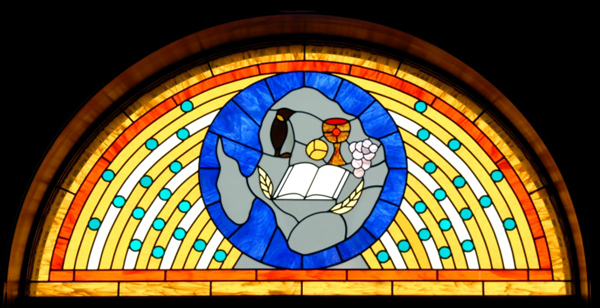
Just in case being vertically challenged should become all too much to deal with, the Chapel of the Snows was open for reflection. Being the southern most church in the world is a coup on its CV, but the most eye catching piece of the church’s architecture is the stained glass window. Made up of bold primary colours to blend in with the surroundings, the penguin, chalice, grapes and book are deliberately ambiguous. Being blank, the book could be any religious text, The wine and bread could be the Eucharist or just friends sharing food and drink. The emperor penguin is not only native to the continent but represents personal sacrifice, with the male penguins sometimes starving to death incubating the egg and waiting for the female to return with food. In a twist of semiotics, the onus is on the viewer to provide meaning for the image.

If religion just doesn’t do it for you or if the relationship between signifier and signified just does your brain in, any unfinished soul searching can always continue in the bar. Here it is possible to sit back with a Speights and watch the ice hockey on wall mounted screens while the gaze of a wooden stag’s head bores into the back of your neck. This is the ‘metaphysical pole’ where you can while away hours wondering whether you actually exist and, if not, what keeps happening to the beers you order.

Perhaps that’s what the crate marked ‘perfection’ was all about. If everyone spent their spare time soul searching then not much praying or drinking would get done and the available facilities would not be used to maximum capacity, which really would be a crying shame. It’s far easier to box up flawlessness and leave it in an obvious location, thus sparing everyone the work of the hunt.

So, there you have it. Those who tell you to stop looking for perfection because you will never find it are wrong: photographic evidence never lies. If the plane ride to McMurdo to find the box is a little out of your league, just buy some arctic lego, throw away the polar bear, bring it down to the right hemisphere and you’re away. With the aid of a permanent marker and some philosophical pondering over what it really signifies the little white brick will do nicely…

Saturday, January 7, 2012

The Longest Day


"One o clock melts into two o clock melts into morning
In this never ending day where shadows wax and wane
And conjure up strange images
Of sleep
In the world of insomniacs."


Back in Christchurch with the shadow of the blinds painting me zebra, it’s hard to believe this is the same sun that stood watch over my entire Antarctica trip. It’s a good place to start a narrative though because although most of the trip was like an action movie on fastforward playing out in a giant freezer, the sun stayed lazy and took its time.

During the summer months it never gets dark in Antarctica so in some ways it is like walking right into a Dali painting, the kind where the sky hangs like treacle and melted clocks prevent the future from ever happening. Only in some ways though because even though the desert landscape fits and the shadows seem grotesque at 3am, the heat is missing. We got a fitting surrealist welcome when we arrived into Scott Base, with the five suns of a ‘sundog’ halo up above that could have come from a scientific manual.

Back home in NZ everyone knows that sun = summer = sunscreen, and it’s no different in Antarctica. No different except for the fact that there is no ‘no burn’ time and protection is essential even at 2am. It was a bizarre feeling to be reaching to the SPF100 well past midnight and even stranger having to remember to dab it up into your nostrils because of the strength of the reflected UV rays. It was equally bizarre to be digging a snow cave at 11pm, midnight, 1am and still have our pit lit up like a stage. We figured the whole sleep thing could wait and the hyperactive sun did nothing to dissuade us from that view.

One thing that no one reminds you to pack when you head down South is a pair of togs. Really they ought to be essential. The reflected light creates a far better sun bed than any white sand beach ever could and some days the sun feels warmer than back home. That may of course have something to do with the layers of black thermals soaking it up and causing us to pose as if we were in an advert for Speights as ‘Southern Women’, but we all came home with particularly attractive goggle tans and surprisingly brown hands.

Some members of our group took sunbathing more seriously than the casual strip down, with one lad digging a ditch across the main walkway outside his tent. He asked me if I was wondering what he was doing and I nodded, perplexed. Was it a polar bear trap? A trench to lie in and snap paparazzi photos of the tutors? In fact it turned out to be a sunbathing trench. Designed to maximize the natural light resource. Unfortunately the construction was voted to be too much of a Health and Safety hazard because not everyone was familiar was the old NZ adage ‘slip slop slap and wrap’.

In the words of Robert W. Service, ‘there are strange things done in the midnight sun’. This tepid 9am chink of morning knows more than it is letting on. More tales from The Ice will follow, but in the meantime don’t forget the sunscreen.

Saturday, December 17, 2011

Southward Bound

Anyone would think we were expecting it to be a tad cold....


In six hours I will be on a plane en route to the great white continent that has dominated every waking hour of my life for the past six weeks. It only started to feel real when I was at the mall this morning and the wrapping paper girls asked Pip and I if we had any plans for Christmas. When our reply was a casual 'we're going to Antarctica this afternoon' I just felt the larvae of excitement hatch and start crawling up the back of my shoulder blades like a plague. I haven't been able to rid my face of a grin ever since.

Things were not looking quite so rosy on Friday morning when we went to get kitted out by Antarctic NZ. The fleece layers and ECWs (Extreme Cold Weather Gear) and mukluks were all awesome and it felt like we were kids again, playing dress ups at the Hillary exhibition at the museum. The thermals kind of threw me off though. 'Small' is the smallest size for ploypros, merinos and gloves and unfortunately my body and the set dimensions of the clothing provided could not reach a consensus. In short, the gear was way too big. If we had been kitted out on Thursday I would have been a bit calmer, but after an initial panic it was mum to the rescue, couriering down my sister's merino underwear on overnight delivery. Once that arrived I could relax enough to dress up and have a bit of fun waving to busses on the street outside and posing with the neighbours' bbq!

I do have a pair of AMAZING gloves though, gloves so magical that I feel hot springs in my chest just looking at them. Rainbow wool, they are fingerless gloves with a convertible mitten top and cosy fleece lining. Now you see the pinky, now you don't! They will go well with my pink patterned knitted hat. That hat is in for a treat. It already thinks it's been everywhere, having seen a German winter, the inside of a freezer bar, a polish summer and countless hikes in the Waitakeres, but Antarctica will be something else.

Our layering goes something like this: thermals, fleece pants, microfleece top, fleece top, overtrousers, insulating jacket, windproof jacket, ECW coat, sorel boots, mittens, hat, neck gaiter. That's about it. It's all very exciting and all very orange, but perhaps also a slight overkill when you consider that the forecast for Tuesday is something like +1 degrees. Then again, it's Antarctica. Posing is all part of it. We will look like real expeditioners as we use our Shewees and stand to pee in the igloo toilet round the back of the tents, faces enshrouded in fake fur hoods to dissipate the wind. It's official, Pip and Christel and I are now 'dudes', not that you could really tell the difference when we are all bundled up in our cold weather kit.

Anyway, the important thing is that we WILL be bundled up in our cold weather kits, flying on a C17 over the sea ice to Pegasus runway, catching a lift in a Hagglund back to Scott Base, going to survival school and drooling over skidoos. We are actually going! I'm sure I'll have countless tales to tell when we get back on the 30th, but until then, this is Hanne to the world, 'over and out'...

Thursday, December 15, 2011

Canine Commemorations

3pm November 14 1911: Amundsen reaches the South Pole...

7pm November 13 2011: Hanne looks just as pleased as he did!


14 November 2011 was a very special day for Norway in terms of Antarctic history. Why? 3pm on 14/11/11 marked the 100 year anniversary of Roald Amundsen and his team reaching the first pole and being the very first people to set foot on that patch of world. Since then white spaces on the map have been slowly eroded and filled in. Try as she might to resist being mapped, waxing and waning with the seasons and the sea ice, Antarctica has been sketched, recorded, gridded, photographed, satellited, gpsd and had just about every other existing technical verb applied to its vast surface.

My flatmate Christel was very proud yesterday, waltzing around the city waving her Norwegian flag and whipping out her framed portrait of Amundsen and his men at every opportunity. The centenary happened to coincide with a reception at Canterbury Museum where the director of our programme, Dr Bryan Storey, was presenting a crampon to the museum collection. I don't think I've ever seen so many people so excited over a piece of footwear! We spent the evening touching the artifact, nibbling on delicacies and mixing and mingling with the who's who of Antartcticans here in Christchurch.

At this reception I got talking to Baden Norris, curator of the Lyttleton museum, long time Antarctic veteran and master storyteller. It's the last of his credentials that intrigued me the most and I can see myself following up with him again at a later date to be the loom for a few more yarns. He assured me towards the end that 'some of it, at least, was true'. I actually learnt quite a bit about dogs as well. We were chatting in front of the display with two stuffed huskies and a mannequin in Antarctic clothing and the mannequin is supposedly modeled on Baden himself. This came as something of a surprise to him, but he had raised one of the dogs from a pup and had worked with both. I imagine it must be rather odd to see animals you worked with taxidermied and put behind glass, but he just told me he thought he deserved a royalty for them. Indeed, they have very nice pelts so he did a good job raising the pup! He also enlightened me on the differences between Huskies and Malamuts, with true Huskies only coming from Greenland. The dogs he dealt with were bred there and in Christchurch, but they were the last of the pure breeds in this area of the world.

The dogs were a hot topic for me on Wednesday largely because of the events of the following evening. As a premature celebration of Amundsen's centenary the Antarctic Society arranged for the K9 dog sled team to come and do a demonstration. The dog food brand's slogan is 'feed your dog's inner wolf', so the team of racing 'Huskies' and Malamuts was a novel way to back up that message. Mark Roberts explained how he fed and trained the dogs and how he gave directions to them while we all gave the dogs a cuddle and received enthusiastic attention. Then we got a live demonstration, not on snow of course, but with a wheeled chariot attached to the lines instead. First of all three little kids hopped into the basket and went for a zoom round the carpark and then they asked if anyone else wanted a go. The 'YES!' was out of my mouth before I even had time to think about the appropriate response. Like an overripe apple, it tumbled to the ground and landed right at Mark's feet and he said 'ok then, hop in'. I actually thought my face might rip in two, my grin was that big. It was the weirdest feeling, halfway between being in a high speed passenger train and on a racing sidecar. Probably more like the sidecar, actually, but incredibly smooth. Coming down to Christchurch I never would've dreamed of trying out dog power, but it just goes to show that you never know what is around the corner. I won't be forgetting the 100th anniversary of Amundsen's milestone anytime soon, that's for sure!

Friday, December 2, 2011

Seafood Serengeti

Seafood in the Serengeti of Antarctica


We have a very interesting past few days with a series of lectures focussing on fishing in the Southern Ocean and the biological and political factors that are involved in such an activity. One term that will come up a lot is 'Antarctic Toothfish', marketed in the USA as 'Chilean Seabass'. Very little is known about this fish, which is a top predator in the Ross Sea region. The best estimates of scientists as to its longevity, spawning, reproductive age and growth rate have been fed into a fisheries model to estimate the biomass and set total allowable catch limits for CCAMLR member states who wish to harvest it. The fishing industry touts the Toothfish Fishery as the best managed fishery in the world and while it is true that allowable catches are more or less obeyed and they do have scientists hard at work trying to discover more about the creatures, at the moment they lack the information to know if their predictive models are anywhere near accurate and if the catch limits are appropriate.

New Zealand was the first to start fishing for Toothfish in 1996 and since then the floodgates have opened, with up to 21 vessels traveling to the fishing grounds in a season. We still send four boats down every season, which lasts from 1 December until the quota is full. It's a lucrative business, pumping around $30 million into our economy each year. We are also seen as leaders in fisheries management internationally and were the first country to introduce a Quota Management System. We generally use quite conservative estimates when setting quotas too, predicting how much could be harvested sustainably and then halving it to allow for a margin of error. The problem is that with the Toothfish we are still in the dark about many aspects of its life. The implications of overfishing a top predator like this are not known, and while the officials try to negotiate industry and environmental concerns when setting the quota each year, they tend to feel they have succeeded only once they have 'pissed everyone off'.

After all this debate on fish and fishing, it was interesting to hear from Dr Julia Jabour on Whaling. Most people seem to have no problem with fishing but absolutely draw the line at killing whales which is an interesting situation, particularly when the legislation in place in control both is very similar. Up until 1985 the International Whaling Commission did set quotas for minke whales, but the quota was temporarily set to zero until they had 'better science'. That moratorium has been in place ever since, despite increasing numbers of stock. The main argument against whaling? They are intelligent mammals. In fact the slide in this part of the presentation looked like it could have been lifted form a brochure on vegetarianism. 'The whales have done nothing wrong', 'whales have feelings too', 'whales are warm blooded', 'whales can communicate with each other'. All true. The strange thing is that most people who ardently argue that these attributes belong to whales see no contradiction in going to the supermarket and picking up a juicy processed steak or pork chop. The same argument could be applied: the pig is an intelligent mammal that did not do anything wrong and has feelings and can communicate. To be consistent surely you have to apply the same rules to both and either accept whaling or not eat any meat. Either that or accept that people are hypocritical and swayed by emotions, particularly when 'cute fuzzy' - or in this case 'massive and awe-inspiring' - animals are involved.

The problem is that whales count as cute, while fish do not. When it comes to fishing and whaling in the Southern Ocean contradictions abound. No one seems to be overly concerned that we are harvesting fish that we know very little about, including where they spawn or how long they live. Without this sort of data, the models that usually have a margin of error or +/- 20% are not particularly useful. People would not accept the harvesting of 30-50% of the biomass of whales. It is time they realised that ecosystems are connected, fish are important regardless of their aesthetic shortcomings and it is important to proceed with caution in order to keep things in a relatively balanced state.

Thursday, December 1, 2011

Artists in Antarctica

'....One day I'm going to do that too'.


Today we had the painter Margaret Elliot come to talk to us about our personal experience projects. They are all about responding creatively to our time on the ice and can take the form of a painting, a story, poems, visual diary, collage, sculpture... the list is endless. It's refreshing to know that this course is not all about science or all about pure academics and I am quite excited about the sort of writing I might come up with during and after the trip.

We have already had a couple of artists who have been on the Artists in Antarctica scheme come and speak to us. I first heard about the scheme in 2005 at the Bell Gully writing festival at Victoria University, Wellington. A highly impressionable sixth former, I can still remember sitting in that lecture theatre looking at the images and thinking 'one day I'm going to do that too'. That particular scheme was a joint project with Creative New Zealand and these days you can no longer apply, the participants are shoulder tapped. That change in structure in 2008 gave me even more reason to apply for PCAS.

One of the other women on the course is a visual artist and she decided to take this route for slightly different reasons. For me it was a way to open myself up to a whole new world. She wanted to do that too but was worried about being beholden if she took part in such a scheme, having to say nice things and produce somewhat formulaic work that was all planned in a brief before the trip. She felt that it would be limiting to go as an invited artist because to say anything untoward would be to bite the hand that feeds, whereas you have much more freedom as an academic.

The idea of being in a bind also came up in Vicki Wilkinson-Baker's talk on Antarctica in the Media. She has been to the ice twice but also talked of feeling 'beholden' because she needed to be 'babysat' by well trained staff all the time for safety and could only do what Antarctica NZ wanted her to do and had planned out. They were very helpful with preparing stories such as the discovery of NZ butter in one of the early explorers' huts because of course those are the stories that help get funding for restoring the huts. The fact that the find was actually a year old and being kept secret until media could take part in the 'uncovering' didn't worry her too much because it was for a good cause, but the fact that it was practically impossible to ask probing questions about things that the officials did not want to discuss is still a niggle. It is very hard to investigate things down there because no one wants to make trouble or upset other bases and it's not like you can camp out in your own media van, being completely independent. Vicki did raise the prospect of one day having devoted 'Antarctic Correspondents' though, which would certainly be an exciting day!

For now, I'm just trying to suss out whether my famous crayola washable markers that accompany me everywhere are likely to survive in the deep southern freezer. I'll be sure to report back the results.

Monday, November 28, 2011

Politics and Power

New Zealand: 'an intellectual and logistics gateway to Antarctica'


Politics and Power: These two words are the Romeo and Juliet of diplomatic language, and the Antarctic is not immune to the lovers' tiffs that come with the pair. Yesterday we had Anne-Marie Brady come and give a lecture on 'New Zealand's Strategic Interests in Antarctica' and judging from my three pages of notes, I found it quite an engaging talk. It opened my eyes to other ways of seeing things and provided an excellent counterpoint to the science-based lectures on flora and fauna of the previous week. No carnivorous ducks here, but whenever power is involved you can guarantee that someone is thirsty for blood.

The first thing to remember is that there are differing ways of perceiving Antarctica. Coming from New Zealand it has always been relatively close and a place we have learnt about in school. Many explorers, both of the heroic age and of late, launched their missions from Christchurch and it is still the gateway city to Antarctica for NZ and the USA and many of us feel like the continent is 'part of our national heritage'. We look at a map of 'the pie' and point to the Ross Dependency as being 'ours'. According to the Antarctic Treaty we are allowed to assert this claim of sovereignty, but other countries are just as welcome to ignore it, leading to an interesting situation where places like NZ and Australia say 'ours' but places like the USA and South Korea say 'everybodys'.

New Zealand's territorial claim over the Ross Sea region is interesting too in that the Ross Dependency was only formally added to the Realm of New Zealand as recently as 1983. New Zealand had been in charge of administration of the region since the UK claimed it in 1923, but 1983 marks a definitive moment in our polar history: we asked if England wanted it back, they sat down over a cup of tea and said 'no thanks', so we adopted it officially as our own. It is particularly interesting that this happened many years after the Antarctic Treaty came into force in 1961, effectively putting all territorial claims 'on ice' and ensuring no new claims could be made. The addition of an area larger than all of New Zealand to our realm went largely unnoticed.

What was noticed was when the icebreaker that was to create a sea passage into McMurdo was recalled to the Northern Hemisphere and the suggested replacement was a nuclear powered ship. New Zealand has a well known nuclear free policy and do not allow nuclear powered vessels into our waters. Luckily for our politicians there was an easy out: this legislation does not apply to the Ross Dependency, only mainland New Zealand. In the end another non nuclear ship was used, but this was the sort of story that illustrates how complicated it can be to balance lawful behaviour, international diplomacy and resupply issues in the far South.

In many ways the money set aside in the NZ budget for Antarctic Research is done so more for political than scientific reasons because the more research we do down there and the stronger our presence, the better it looks on our 'Antarctic CV' and the more assertive we can be about our claim should the Antarctic Treaty collapse. Taking responsibility for Search and Rescue efforts in the Ross Sea is another notch on our way to getting a Duke of Ed medal, as was our offer of beds at Scott Base for Malaysian scientists. As in any other area of life, there is a lot going on out the back that is not necessarily said directly, but nevertheless strongly influences policies and approaches.

New Zealand actually has a relatively large influence internationally when it comes to Antarctic matters, largely because of the many research papers published by this country. Being so close to the continent, we have a vested interest in terms of security, but science, economics, politics and environmental concerns all play important roles for us too. New Zealand hopes to be 'an intellectual and logistics gateway to Antarctica', and if we play our cards right and get the right diplomats speaking to the right diplomats it is a very achievable goal.

Saturday, November 26, 2011

At Cass

"The mountains tend to their mantles of snow, going incognito against the pensive sky"


When classes involve taking a 2 day trip up into a Rita Angus painting to look at rocks and climb mountains, you know life is good. It was supposed to be an exercise in sussing each other out, seeing who snores, deciding who we would like to tent with on the ice (yes, we are camping!), but it also provided a great opportunity to do some observation of a foreign landscape. OK, so it was quintessential New Zealand, but the High Country is somewhere I had never been, so there was a lot of noticing to do and the roof of the lodge provided the perfect transcription platform:

The greens are different up here. Not as toxicly bright, but older and wiser, like wrinkled skin that remembers more than its wearer would like it to. The stones are smaller, massed in packs so they flow like iron filings to a magnet, drawn toward the valley floor where they splay out like toes testing their footprint in damp sand. Grain by grain they are ' making land'.

The greens are tired, but it is all a matter of comparison. Just as the most spritely pensioner at bingo is 'the young one', set against the lino cut mountains these hues are life, undisputedly. The green is the child in the valley, the quiet one who has 'been on this planet before', you can tell by the eyes. Here the mountains guard, protective, like parents with children on the cusp of adolescence. They hover, pretending to be otherwise occupied, tending to their mantles of snow that allow them to go incognito against the pensive sky.

We come here to this valley and palette and bring our own stories, want to know where, why, how? Does the grass know what it feels like to be greener? Do the pebbles ever yearn for their perch way up close to the sky? Made of incredibly squashed and incredibly dead algae carcasses, the castle rock sandstones are in fact a massive sea floor graveyard. Do they remember the sound of the waves?

Why is it that the very first urge I had was to personify the landscape? No shaking of hands, no presenting a particular side of oneself to another. This was a one sided introduction. Much as the words signify elements in the surroundings, they are mirrors and an introduction to the writer, the personifier. The one who wonders about wrinkled skin will develop crowsfeet, will paddle in many oceans, may even play bingo one day if she makes it that far. She will meet 'old souls', wear a cloak of her own.

And the grass? It will keep growing, oblivious to its pigment and the deficiencies perceived through other-eyes.

Monday, November 21, 2011

Stunning in white

“Antarctica looks stunning in white and she knows it”


Antarctica has been depicted as a seductress many times, playing on the trope of the pole as a sleeping beauty. Amundsen knew the continent as a ‘she’, writing ‘Beauty is still sleeping, but the kiss is coming, the kiss that will wake her’ (The South Pole, 1912). Bill Manhire expanded on it, talking of a ‘seductress’ and making sweet love. This idea seems to reinforce the notion that Antarctica is a masculine space, a space for men to act out their fantasies of conquering, of winning, of having the power to awaken with a kiss and, implicitly, from then on control. What is conquered is tamed, is obedient, is no longer a threat.

We have asked questions such as ‘what does it mean to be a tourist going to the ice? What does it mean to be a scientist? What does it mean to be a student, an ambassador? What about ‘what does it mean to be a woman’? For a female to head to the most barren, inhospitable continent on earth is contrary to the image of the apple, the age old tale of fertility and original sin. You can’t freeze apples, they oxidize. They don’t thaw out the same.

And how will we thaw out? Sore thumbs in a microbial landscape, digging holes in the snow under Dali’s sky. Magnifying, reflecting, analyzing.
What will we find?

Striations mark the progress of her sister lands and if we were less careful we might say she mourns the loss. Instead this land stays dry, a frozen, sliding mask that betrays little of the stony faces far below.

Antarctica holds many secrets within her belly that are yet to be discovered. Lake Vostock, a womb, laid out on the operating table awaiting the caesarean that will tear open the moist dark warmth, expose the microbes not yet ready to see the light. The kiss has been administered and she stirs, her sighs a surge of katabatic winds. She stretches, cracks her fingers to release tabular bergs into the sea. Her glacial fingers snatch at her abdomen, silent in their screams. And still they drill.

They conquer.

Saturday, November 19, 2011

Polar Police


'We don't have Polar Police because it is all consent based... rights and responsibilities go together'
- Dr Julia Jabour's 'Introduction to International Law'


It's the end of week one already and things have gone by in an absolute blur. Naming every new and exciting thing I have learnt or has happened would be like counting snowflakes in a blizzard, but here are a few of the crystals I have managed to keep.

Thanks to the Antarctic Treaty, Antarctica is a continent devoted to Science and Peace. Science is the one that tends to get the most press because it is 'the currency of diplomacy', right at the heart of the cooperation between treaty signatories. It's quite remarkable that although the treaty was adopted in 1959 and came into force in 1961, both Russia and the USA were original signatories and continued to turn up to meetings throughout the cold war. This links to the peace aspect of the agreement. Although the USA used to have a nuclear power plant at McMurdo, the testing of nuclear weapons, nuclear explosions and the disposal of nuclear waste are all forbidden. We don't have 'polar police' because the treaty system is all consent based and 'rights and responsibilities go together'. Still, I can't get the image if a penguin in a blue cap flashing a badge and demanding entry into a base out of my head...

Other than that, Nationals of each country are subject to the jurisdiction of their homeland, meaning that different laws apply to different people.The rest of the base can happily stand to take a leak at any time of day, but the poor Swiss need to keep an eye on their watches and ensure their buttocks and the toilet seat make contact as soon as it strikes 2200 hours. Or else. It's never really ok to go around murdering people left right and centre a la horror classics, but it does raise an interesting question: what if you have more than one passport? Which set of laws apply?

Prince Albert of Monaco didn't seem too worried about falling foul of the law when he visited Scott Base. He was too busy enjoying the prawns that were served. If the menu were designed to stimulate conversation, it would have provided a nice segway to krill, the most successful and abundant creatures ever to inhabit the bottom rung of the Antarctic food chain. Their high fluorine content makes them somewhat unsuitable for human consumption, as the Russians found out after some culinary experimentation, but they do have super powers. Really. Krill are super neat because they can SHRINK. If there is not enough food they can feed off their own protein and get smaller, only to grow again when they have enough to eat. The 'cup of tea' principle espoused in Alice in Wonderland is alive and well under the ice shelves of the Southern Ocean after all.

There are some other pretty neat critters down South as well, not least the carnivorous duck. That's right, the yellow billed pintail duck of South Georgia has something of a taste for flesh and it doesn't just stop at shrimps either. These bloodthirsty birds have been known to feast on seal carcasses, a fact their benign appearance seems to bely. At least they will not have any problems with vitamin C, raw seal meat is known to be an excellent way to ward off scurvy, so perhaps they are onto something after all...

To finish off the week, a beer is probably in order. After hearing all about the fly infestation at Scott Base, I was keen to steer well clear of Guinness though... No one could figure out where the flies were coming from until a gruesome discovery was made in the storeroom. No, not a rouge member of the penguin police gone on a rampage! Instead, a few cans of Guinness had burst and soaked through their cardboard wrapper. The maggots were having a field day, as apparently the sweet and mushy habitat of rotting alcoholic cardboard is the best kind of Kindergarten. Who would have thought it?


Friday, November 18, 2011


'I am just going outside and may be some time'
-Captain "Titus" Oates, March 1912


'I may be some time' is possibly one of the most cliched lines to have come out of the frozen continent. Luckily for me, I know exactly how long I will be. This summer I am a student at Canterbury University's 14 week 'Postgraduate Certificate in Antarctic Studies' programme. This blog will be my scrapbook, cataloguing frozen snippets from each week and building up to our very own trip to the ice.

So far away and so different to any place I have ever experienced, the ‘Wide White Page’ of Antarctica has long captured my imagination. My initial interest in the continent was sparked after listening to several NZ artists and authors who had been to Antarctica on Creative NZ Scholarships. Writers such as Bill Manhire and Bernadette Hall spoke of the inspiring discoveries they had made whilst down there and their subsequent works (Manhire’s ‘The Wide White Page’ and Hall’s ‘The Ponies’) convinced me that one day I wanted to do the same.

My specific interest is in Antarctica as a literary landscape and I hope to look at the ways the continent was depicted in fictional works around the Heroic Age of Exploration (1895 - 1917). I intend to focus on the importance of imagined space, examining the views expressed not by travelers to the continent but by those far away in Europe who had never set eyes on the ice. By examining these imagined landscapes in various texts I hope to see what values and cultural ideas the authors associated with Antarctica, be they positive ideas about adventure and conquering challenges or more pessimistic portrayals where the landscape is a metaphor for inner emptiness in the face of the industrial revolution and modernization.

You are welcome to follow me on this journey as I learn about the history of the continent, the present political situation, current scientific projects on the ice and embark on my own research project. I look forward to the weeks ahead and beginning to share my own words on the ‘Wide White Page’.